
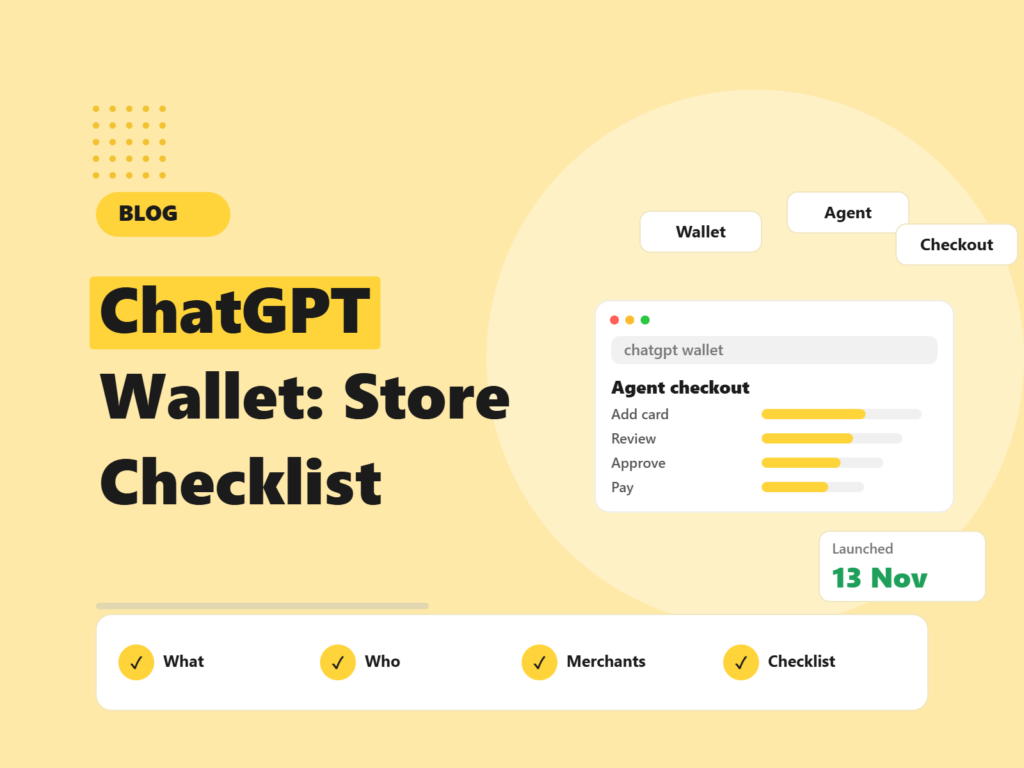
OpenAI announced ChatGPT Wallet on 13 November 2026, a way for its AI agents to pay for things without ever seeing a person’s real card number. It is for US ChatGPT Pro users at launch, so most stores will see very little change this week. But it points to something every ecommerce team should plan for: customers asking an agent to shop for them. Here is how Wallet works, what OpenAI asks of merchants, and a short checklist.
Quick answer: ChatGPT Wallet lets an agent called “dots” prepare a purchase that the user approves with a security check. The card network issues a stand-in credential, so the merchant never gets the real card details. It launched on 13 November for US Pro subscribers aged 18+ with eligible US-issued cards. Merchants should allow signed agent requests and check fraud settings.
What is ChatGPT Wallet?
Based on reporting by PPC Land and Relevant Audience on OpenAI’s announcement, Wallet works inside “dots,” OpenAI’s always-on agents. The steps are:
- The user adds a card once.
- The agent shops and prepares a purchase.
- The user reviews the items, total and selected card.
- The user approves with a security check such as Face ID or a fingerprint.
- The card network issues a stand-in credential (card number, security code and expiry) for the merchant’s checkout form.
- The charge goes to the selected card. The merchant never receives the real card details.
The user deals directly with the merchant for pricing, fulfilment, returns and service. Card rewards and eligible dispute protections still apply. Delegated purchases with spending limits and pre-approval are planned for later, with no date given.
Who can use it?
At launch, US-based ChatGPT Pro subscribers aged 18 or over with eligible US-issued cards. Other users and countries are not covered, and no expansion timetable was given. One report says the help centre limits eligible cards to US-issued American Express, Chase, Mastercard and Visa credit cards, with no debit cards. Treat that detail as reported, and confirm it on OpenAI’s help page.
What does OpenAI ask merchants to do?
OpenAI’s Commerce Partner Playbook, as summarised in the reports, asks businesses to:
- Let agents through. Configure your CDN or firewall to recognise signed requests using Web Bot Auth, and make sure general security rules do not block ChatGPT agents.
- Avoid false declines. Talk to your payment and fraud providers, because legitimate agent purchases can still be flagged, declined or cancelled.
- Keep product data current (optional). Claim your business listing and upload a product feed through Business Hub.
- Go deeper (optional). Build a plugin or add WebMCP tools. Browser access needs neither.
Named partners include American Express, Mastercard and Visa on the card side; Forter, Riskified, Sardine and Signifyd for fraud prevention; and Adyen, Checkout.com and Stripe for payments.
A technical checklist for your team
- Check bot rules. One report says visits are signed with Web Bot Auth (RFC 9421) and carry a Signature-Agent header set to chatgpt.com, and that Akamai, Cloudflare, HUMAN and Vercel verify the signatures automatically. If you use another provider, ask how to verify them. See our guide to AI crawlers for the wider picture.
- Test your checkout. The standard card form must complete without steps an agent cannot pass, such as hidden pop-ups or odd verification steps.
- Do not store the credential. One report says merchants receive a network token to use for one transaction only. Follow your payment provider’s rules.
- Ask your fraud provider about new signals. The same report mentions a new Forwarded header with several parameters. Ask whether your provider reads it.
- Prepare a clean product feed. See our guide to product feed SEO for AI shopping.
What is not confirmed?
OpenAI’s announcement does not state, according to the reports:
- Fees for users or merchants.
- Which card issuers are eligible, beyond the reported list.
- How risk systems will identify Wallet purchases.
- Who bears the cost of wrong or declined purchases.
- A date for wider availability or other countries.
Does this matter if you are not in the US?
If you sell only outside the US, nothing changes this week. If you sell to US customers, review your bot rules and fraud settings now. Either way, it is a signal that AI agents are becoming a checkout channel. Our guides on ChatGPT Business Hub and testing AI agents with Microsoft Clarity help you prepare.
Final thoughts
Wallet is early, narrow and US-only, but the direction is clear. Make sure agents can reach your checkout, your fraud tools do not block them by mistake, and your product data is clean. For help with ecommerce SEO and AI shopping readiness, see our ecommerce SEO services or request a free website audit.
Frequently asked questions
What is ChatGPT Wallet?
A feature that lets OpenAI’s dots agents pay for purchases with a stand-in card credential, so the merchant never receives the real card details. The user approves each purchase.
Who can use ChatGPT Wallet?
At launch, US ChatGPT Pro subscribers aged 18 or over with eligible US-issued cards.
What is Web Bot Auth?
A way for agents to sign their requests so sites can verify them. OpenAI asks merchants to recognise signed requests and avoid blocking ChatGPT agents.
Do merchants get the real card number?
No. The merchant receives a stand-in credential issued by the card network.
Are there fees for merchants?
The announcement does not state fees for users or merchants.
We check your checkout, bot rules and product data so AI agents and customers can complete purchases.

Riya Bhardwaj
Leading content and growth initiatives with a focus on search visibility, audience engagement, and measurable business outcomes. Specialised in SEO, Generative Engine Optimization (GEO), AI search optimisation, and performance-driven content marketing. Passionate about transforming market insights into scalable content strategies that strengthen brand authority and drive sustainable digital growth.