

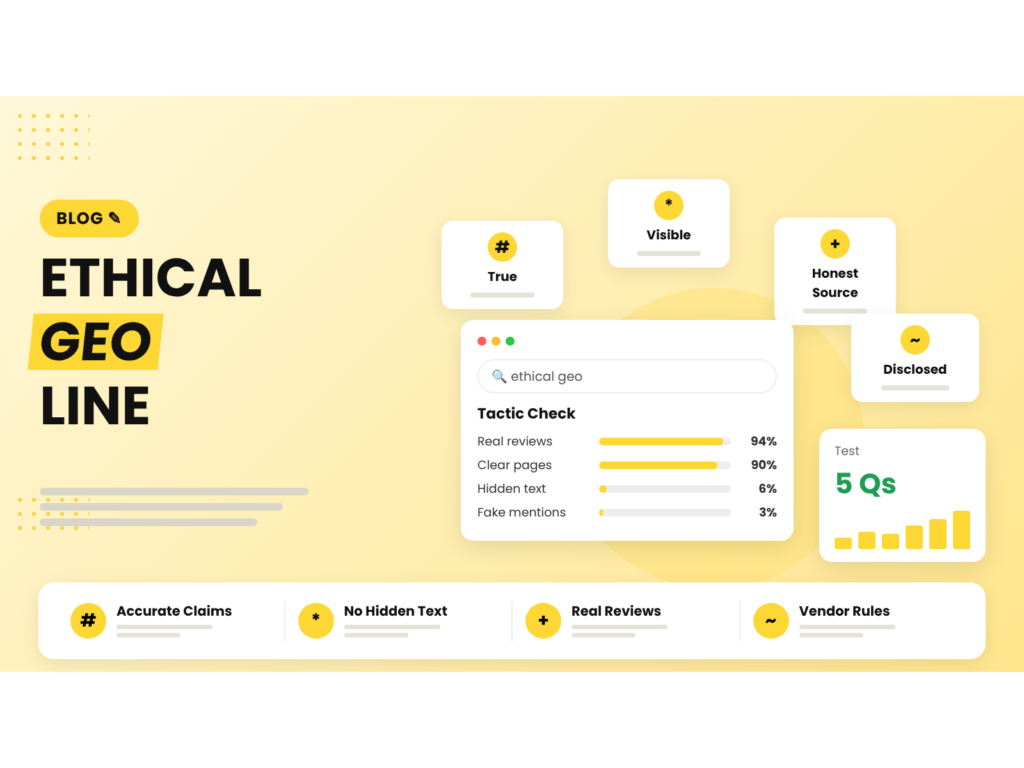
Generative engine optimization, or GEO, is the work of making your brand easier for AI tools to find, understand and cite. It is a fair goal. But as the field grows, some tactics have crossed into manipulation: fake reviews, planted mentions, hidden text aimed at AI crawlers. On 8 October 2026, Anthropic published a usage policy, effective 12 November, that bars using Claude to manipulate the sources AI systems draw answers from. Whether or not you use Claude, it is a useful signal of where the rules are heading.
Quick answer: Good GEO makes true, useful information easier to find and verify. Manipulation tries to fool AI systems with fake or hidden signals. Stay on the right side by publishing accurate pages, earning real mentions, disclosing relationships, and never creating fake reviews, fake accounts or hidden instructions for AI tools. If a tactic would embarrass you if a customer saw it, do not use it.
What was announced
According to a report on 8 October, Anthropic published a usage policy effective 12 November 2026 that prohibits using Claude to manipulate the sources AI systems use to produce answers. Read the policy itself for exact wording, because summaries leave out detail. The wider point is that AI providers, search engines and platforms are all moving against deceptive tactics.
Google is moving the same way. Its guidance on deceptive authorship, which we cover in our fake author bios guide, and its spam updates show that low-trust shortcuts get more expensive over time.
Acceptable and risky tactics
Acceptable tactics include clear, accurate pages that answer real questions, structured data that matches visible content, consistent brand details across the web, genuine customer reviews, original research, and honest outreach to publishers. Risky tactics include fake reviews or testimonials, networks of fake accounts, planting promotional text in forums or Wikipedia without disclosure, text hidden from people but aimed at AI crawlers, and mass-produced pages with invented facts.
A simple test for any tactic
1. Is it true?
Every claim should be accurate and provable. If it is not, stop.
2. Is it visible to people?
Content that only machines can see, or that says something different to machines than to people, is a red flag.
3. Is the source honest?
Reviews should come from real customers. Mentions should come from real publications and people who chose to write about you.
4. Is the relationship disclosed?
If you paid for, wrote or have a stake in the mention, say so where the rules require it.
5. Would you defend it publicly?
If a customer, journalist or regulator saw what you did, would you be comfortable? If not, do not do it.
What to do instead
Invest in what lasts: original data, expert content with real authors, clear product information, and structured data that matches the page. Our guides on schema markup and llms.txt cover the technical side safely.
Write it into your agency and vendor rules
Add a short clause to your contracts and briefs: no fake reviews, no undisclosed paid mentions, no hidden text, no invented sources. Ask vendors to confirm in writing. It protects your brand and gives your team a clear line to follow.
Frequently asked questions
What is GEO?
Generative engine optimization is the practice of making your brand and content easier for AI tools to find, understand and cite.
What did Anthropic announce on 8 October 2026?
Anthropic published a usage policy, effective 12 November, that bars using Claude to manipulate the sources AI systems draw answers from. Read the full policy for the exact wording.
Is GEO against the rules?
No. Making accurate, helpful content easy to find is fine. Deceptive tactics such as fake reviews and hidden text are what platforms are moving against.
Are paid mentions allowed?
Paid mentions can be legitimate if they are real and properly disclosed. Undisclosed paid placement or fake endorsements are risky.
What is the safest GEO approach?
Publish accurate pages, use real authors, keep brand facts consistent, earn genuine mentions and reviews, and avoid anything you would not defend publicly.
We design programmatic SEO systems with the data, templates and quality controls needed to grow long-tail traffic safely — without risking a scaled content penalty.

Riya Bhardwaj
Leading content and growth initiatives with a focus on search visibility, audience engagement, and measurable business outcomes. Specialised in SEO, Generative Engine Optimization (GEO), AI search optimisation, and performance-driven content marketing. Passionate about transforming market insights into scalable content strategies that strengthen brand authority and drive sustainable digital growth.